



Understanding the Red Zone: Supporting Neurodivergent Children Through Meltdowns, Shutdowns and Emotional Distress
Foundations Child & Family Therapy | November 2026
As parents, teachers and clinicians, we can sometimes find ourselves faced with behaviours that are difficult to understand. A child may suddenly become angry, overwhelmed, tearful or withdrawn. They might shout, refuse to engage, run away or completely shut down.
These moments can be challenging for everyone involved, but it is important to remember that behaviour often tells us something about how a child is feeling and coping with their environment.
At Foundations Child & Family Therapy, we recently explored these ideas through Managing the Red Zone, a presentation by Catrina Lowri, founder of Neuroteachers, an experienced SENCO and SEND teacher who also brings her own lived experience of neurodivergence.
The presentation encouraged us to think differently about behaviour, particularly when supporting autistic children, children with ADHD and other neurodivergent young people.
What is the Red Zone?
The Red Zone describes a state of intense emotional and physiological dysregulation, when a child may feel so overwhelmed that they temporarily lose access to their usual coping strategies.
For some children, this may look like a meltdown involving crying, shouting, throwing objects or attempting to escape a situation.
For others, distress may present as a shutdown. They might become quiet, withdrawn, unable to speak or seemingly disconnected from what is happening around them.
Although these responses can look very different, both may indicate that a child is struggling to cope.
It is important that we do not automatically interpret these behaviours as deliberate defiance or a refusal to cooperate. Instead, we need to consider what the child is experiencing and what may have contributed to their distress.
Understanding the Window of Tolerance
One of the helpful concepts explored in the training was the Window of Tolerance.
This describes the range of emotional arousal within which we are generally able to manage our feelings, process information, engage with others and respond to everyday demands.
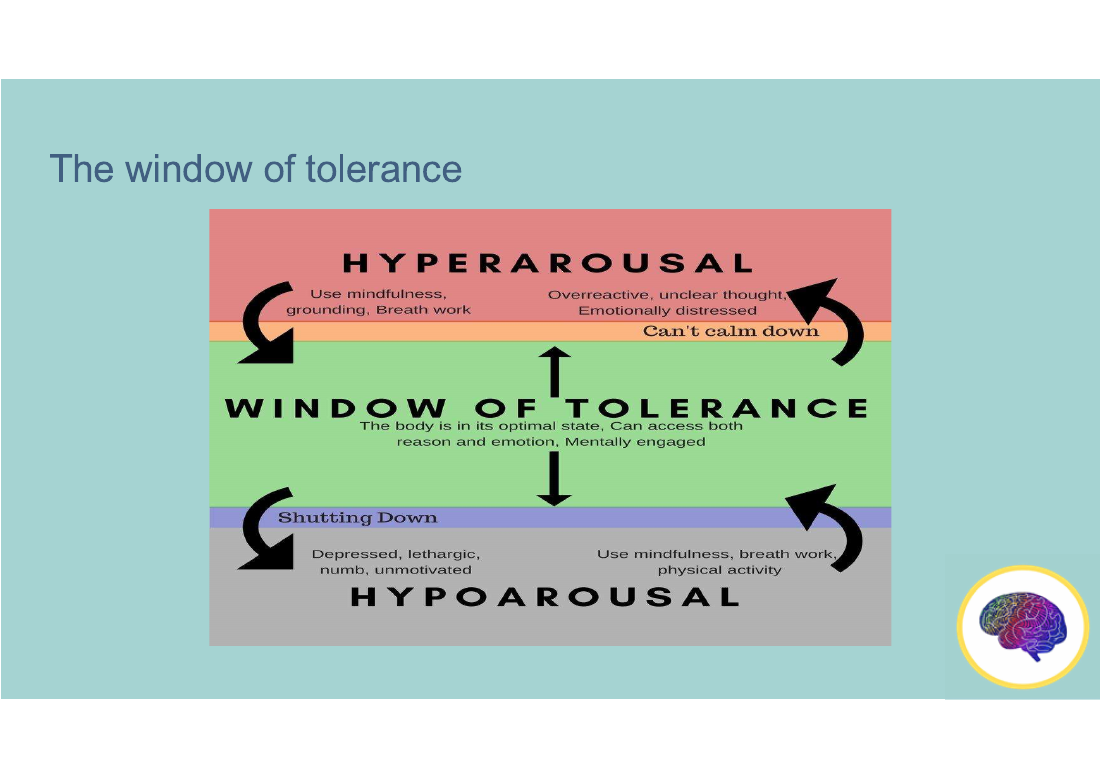
Window of Tolerance – Catrina Lowri, Neuroteachers, presentation slide 3.
When children are within their window of tolerance, they are more likely to feel emotionally available for learning, relationships and problem-solving.
However, when demands become too much, they may move outside this window.
Hyperarousal can involve heightened anxiety, agitation, panic, anger or emotional overwhelm.
Hypoarousal can involve withdrawal, numbness, reduced responsiveness or shutdown.
For neurodivergent children, sensory differences, communication demands, social expectations, uncertainty and transitions can all influence how easily they become overwhelmed.
Recognising these patterns helps adults respond to the child's needs rather than focusing solely on the behaviour they can see.
Meltdowns and Shutdowns: Why the Difference Matters
One important area discussed in the presentation was the distinction between frustration-driven behaviour and a meltdown.
A child who is frustrated may still be able to respond to reassurance, changes in expectations or support with problem-solving.
During a meltdown, however, the child's capacity to process information and manage their response may be significantly reduced.
This is not always a clear-cut distinction, and the same behaviour can have different causes in different situations.
A child experiencing a meltdown is unlikely to benefit from lengthy explanations, repeated questioning or attempts to reason with them while they remain highly distressed.
Similarly, a child experiencing a shutdown may need time, space and reduced demands rather than pressure to talk or participate.
Understanding these differences can help us respond more sensitively.
Recognising Early Warning Signs
A key message from the training was that prevention and early intervention are often more effective than trying to manage a crisis once it has escalated.
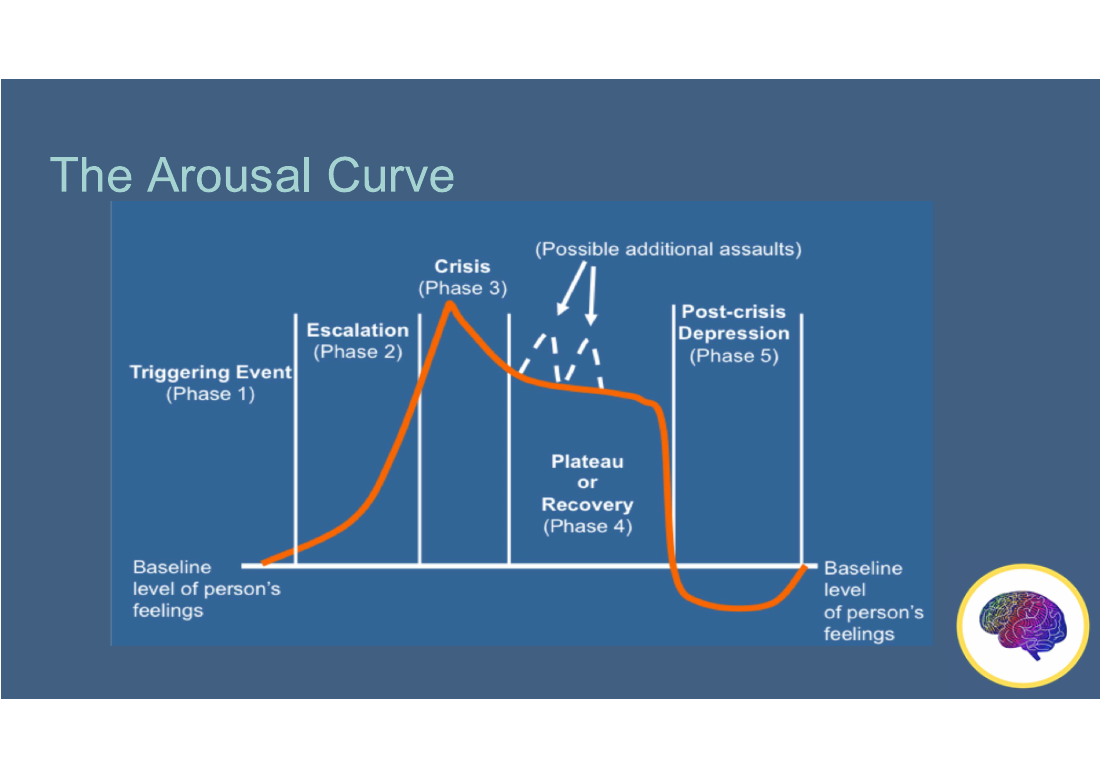
The Arousal Curve – Catrina Lowri, Neuroteachers, presentation slide 4.
The Arousal Curve illustrates how distress can build gradually, reach a crisis point and then move into a period of recovery. It also reminds us that children may need continued support after the most visible distress has passed.
Children may show subtle signs that they are becoming overwhelmed, including:
Increased restlessness or irritability.
Becoming quieter or withdrawing from others.
Difficulty concentrating or following instructions.
Increased sensitivity to noise, touch or other sensory input.
Repeatedly asking questions or seeking reassurance.
Becoming more rigid about routines or expectations.
Finding everyday requests increasingly difficult.
These signs will vary from child to child.
By learning to recognise an individual child's early warning signs, parents and professionals can make adjustments before distress escalates.
This might involve offering a break, reducing sensory demands, providing reassurance or adapting expectations.
Regulate, Relate, Reason: The Three Rs
One of the most useful frameworks highlighted in the presentation was the Three Rs: Regulate, Relate and Reason.
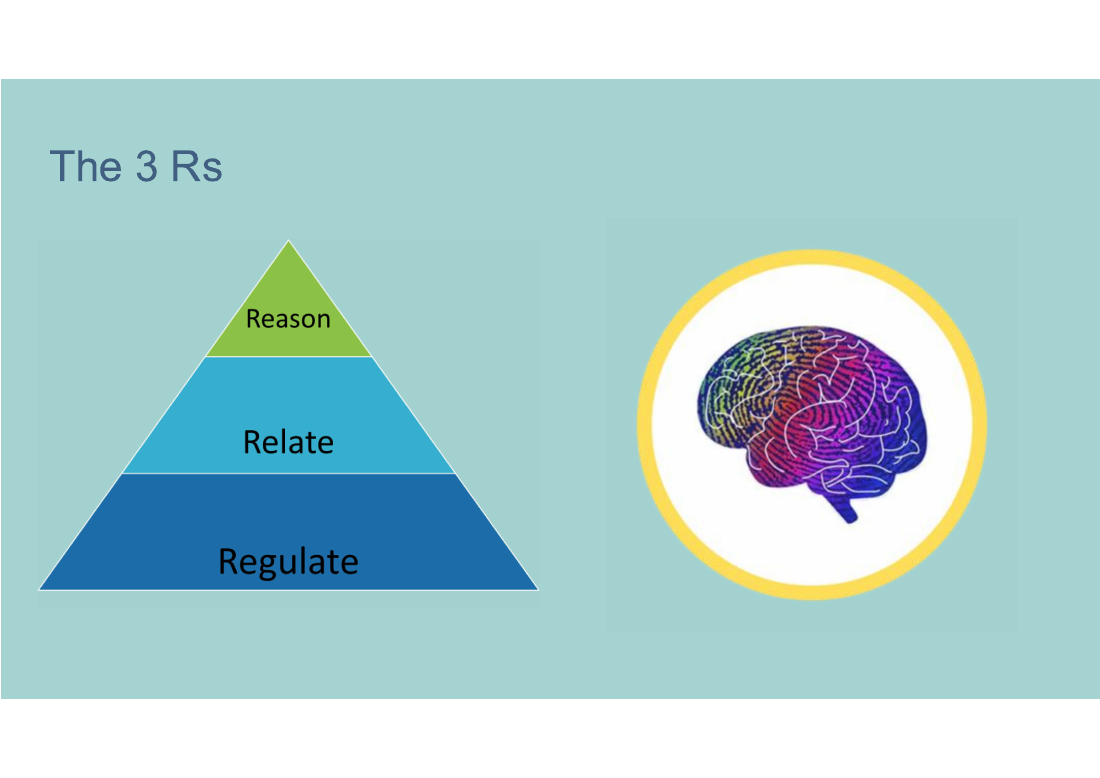
The Three Rs – Catrina Lowri, Neuroteachers, presentation slide 23.
This provides a helpful way of thinking about the order in which we support children experiencing emotional distress.
1. Regulate
Before expecting a child to explain their feelings or reflect on their behaviour, we need to support them in feeling safe and regulated.
This might involve moving to a quieter environment, reducing demands, allowing time and space, or offering familiar sensory supports.
Some children benefit from calm adult presence, while others may need less interaction.
The important thing is understanding what helps that particular child.
2. Relate
Once the child begins to feel more settled, connection becomes especially important.
A calm voice, gentle reassurance and an accepting response can help rebuild their sense of safety.
Rather than focusing immediately on what went wrong, we can communicate that we are there to help.
Children are more likely to engage when they feel understood rather than judged.
3. Reason
Only when a child is sufficiently regulated should we begin exploring what happened and what might help next time.
This may involve identifying triggers, discussing feelings, developing coping strategies or considering environmental changes.
For some children, these conversations may be easier later that day or even the following day.
The aim is not simply to stop a behaviour but to help the child develop understanding, confidence and supportive strategies over time.
Working With Children Rather Than Doing Things To Them
Another valuable theme from the presentation was the importance of working with children.
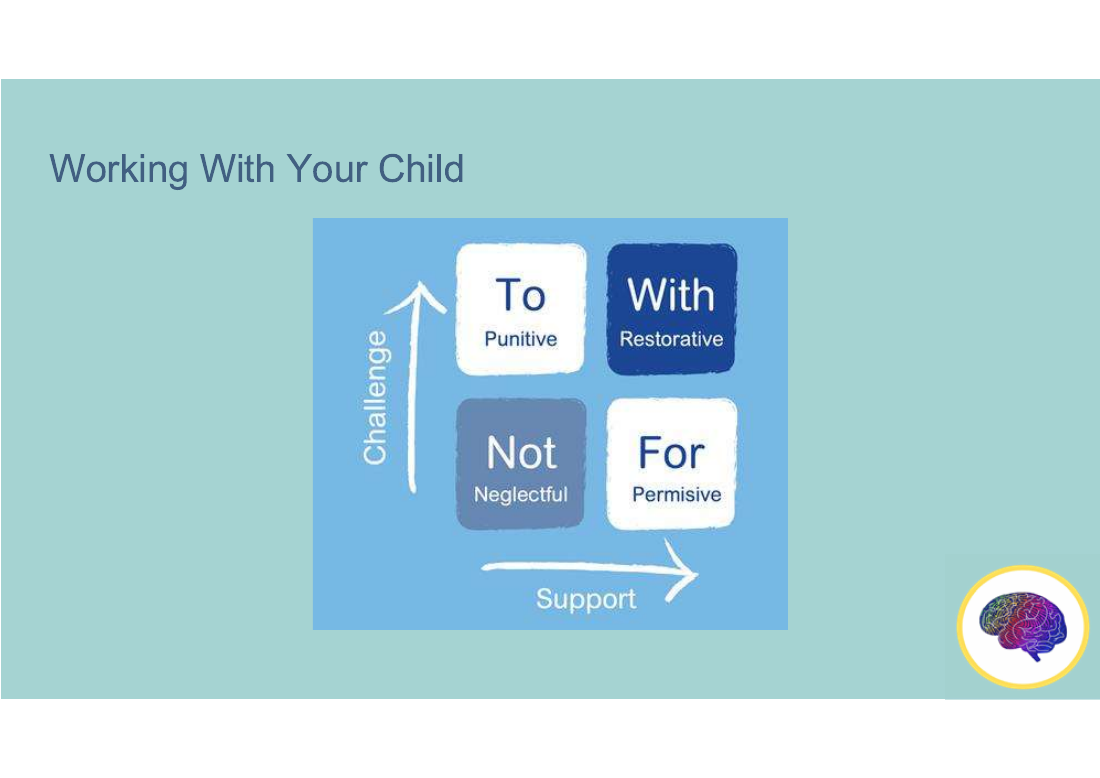
Working With Your Child – Catrina Lowri, Neuroteachers, presentation slide 22.
The diagram highlights four different approaches based on the balance between challenge and support.
A punitive approach focuses on doing things to a child. A permissive approach may involve doing things for them. The restorative approach focuses on working with the child, providing both appropriate boundaries and meaningful support.
Children still need adults to maintain safety and provide predictable expectations. However, these boundaries are often most effective when combined with emotional support and a genuine effort to understand the child's perspective.
For example, instead of immediately asking, "Why did you behave like that?", we might consider:
"What was difficult about that situation?"
"Was there something that felt too overwhelming?"
"What could we change to make things easier next time?"
These questions shift the focus from blame towards understanding and problem-solving.
Every Neurodivergent Child Is Different
The training also highlighted the importance of recognising individual neurodivergent profiles.
Two children with the same diagnosis may experience very different challenges, strengths and sensory needs.
A strategy that works well for one autistic child may be unhelpful for another.
Some children may find noise overwhelming, while others seek movement or sensory stimulation. Some may communicate their distress verbally, while others struggle to identify or explain their feelings.
We also need to consider the cumulative impact of experiences such as repeated misunderstanding, exclusion, masking and pressure to meet expectations that may not reflect a child's needs.
This is why individualised, neuro-affirming support is so important.
What Can Parents and Schools Do?
There are several practical ways adults can support children who experience emotional dysregulation.
Get curious about triggers. Consider what happened before the child became distressed. Were they tired, anxious, overwhelmed by noise or struggling with an unexpected change?
Notice the early signs. Work with the child to identify how they experience stress and what others might notice when they are beginning to struggle.
Create a regulation plan. Identify helpful strategies together, including breaks, movement, quiet spaces, sensory tools or access to a trusted adult.
Reduce language during distress. Keep communication calm, clear and simple. Avoid overwhelming the child with questions or explanations.
Prioritise safety and connection. Respond without shame or unnecessary confrontation, while maintaining appropriate boundaries to protect everyone involved.
Reflect afterwards. Once the child is ready, explore what happened and how the environment or support plan could be adapted.
Most importantly, remember that emotional regulation is a skill that develops through repeated experiences of safety, connection and appropriate support.
Our Reflections at Foundations
At Foundations, we regularly work with children and families who are trying to make sense of emotional overwhelm, school-related distress, anxiety and differences in emotional regulation.
One of the most important things we can do is help adults understand that a child's behaviour is only one part of the picture.
When we focus exclusively on stopping a behaviour, we may miss the underlying need.
When we take time to understand the child's experiences, sensory profile, communication differences and emotional needs, we can begin to create more supportive environments.
This does not mean that every behaviour is acceptable or that boundaries are unnecessary. It means recognising that children are more likely to develop emotional regulation skills when they feel safe, understood and supported.
The goal is not simply to manage the Red Zone. It is to help children feel understood, recognise their own needs and develop strategies that support their wellbeing.
How Foundations Can Help
Foundations Child & Family Therapy supports children, young people and families with emotional wellbeing, neurodevelopmental differences and challenges at home and school.
Our multidisciplinary team provides psychological therapy, autism and ADHD assessments, parent support and consultation with schools.
We work collaboratively with families to develop individualised approaches that recognise children's strengths, needs and experiences.
If your child is experiencing frequent meltdowns, shutdowns, emotional overwhelm or difficulties managing everyday demands, our team can help you explore what may be contributing to these experiences and identify appropriate support.
Contact Foundations Child & Family Therapy to find out more about our services.
Acknowledgement: This article draws on key themes from Catrina Lowri's presentation, "Managing the Red Zone: Teaching Assistant's Guide to Anger, Meltdown and Shutdown in Your Neurodivergent Pupil". Thank you to Catrina and Neuroteachers for sharing their knowledge and perspectives.
Find out more about Neuroteachers at Neuroteachers.
Publishing note: The four original presentation slides are now incorporated into the article above. Please obtain permission from Catrina Lowri or the relevant rights holder before reproducing the slides on the public Foundations website.


Get In Touch
For more information on how we can help you, please get in touch and an experienced member of our therapy team will answer any questions you may have about us or the services we offer.
Contact Us

